Mitigation of the micro world: Ruth Posta investigates mitigating algal blooms

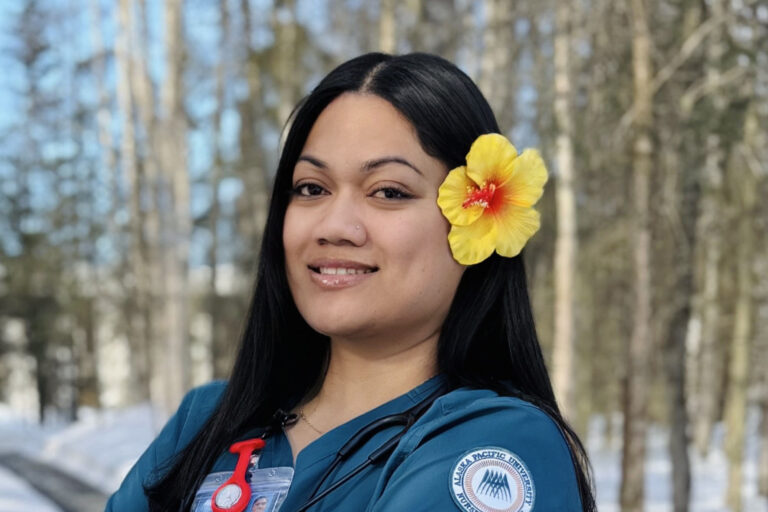
Sequestered into one corner of the APU aquarium lab is a small, two-tank system that houses a multitude of specimens. On one half, there are clown fish and corals, and on the other half there are three spindly mangrove trees, each over a foot in height. While small in stature, it is these saplings’ health that Ruth Posta, a 20-year-old senior at APU, is studying for her senior project.
“The mangrove trees have been in the tank for a while. They just didn’t have a lot of growth,” Posta said, with an eager and warm smile. “I would love to see them grow bigger or have more leaves. They’ll get four leaves, and then when the fifth one comes out, one of the first ones falls off.”
The mangrove tank is a clear acrylic box a couple feet tall, with water rising half-way up the sides. Placed on top is a repurposed, upside-down Rubbermaid tote bin, labeled with a sticker that says, “Mangrove Lid.”

Within the tank are specimens that are less obvious to the viewer: Fuzzy, brown dinoflagellate algae grip the roots of the mangrove trees, form wavering strings through the water, and create a thin film on the glass. The algae, Posta said, is an important member of marine ecosystems, but in large blooms becomes detrimental. In the APU mangrove tank, the dinoflagellate algae cling to the roots of the trees and block the transfer of nutrients into the saplings, inhibiting new tree growth.
Spikes in dinoflagellate blooms are heavily influenced by environmental factors. To test techniques of mitigating dinoflagellates in the mangrove tank, Posta is running four experiments: changing levels of light, introducing competitive bacteria, increasing water circulation speeds, and rinsing the pea gravel substrate in the tank.
For the tests on light levels, Posta is putting the entire tank system into a three-day blackout period. Dinoflagellates are dependent on light, so lower levels of light will decrease algae growth. Because the mangrove trees photosynthesize, however, light cannot be removed from the system for a further extent of time.
The second test Posta is conducting requires the addition of Brightwell Aquatics Microbacter 7, bacteria that will act in competition to the dinoflagellates. The introduction of an ecological competitor will make algae growth more difficult, and the Microbacter 7 are dosed in 10 milliliter increments to avoid harmful bacterial growth.
Posta explained that her third trial—speeding up water circulation—would cut down on dinoflagellate growth because faster speeds inhibit algae from latching onto surfaces and growing further.
The last test requires removing the tank substrate—where the algae tend to pool and collect—and rinsing it with fresh salt water to remove dinoflagellates before the loose gravel is returned to the tank.
Algae samples are collected by scrubbing tank rocks with a toothbrush and collecting the dinoflagellates that gather on the bristles. The amount of algae present is measured by drying samples and weighing the remains. Other water quality measurements like nitrogen, phosphorus, alkalinity, calcium, and pH levels will be taken to understand the system’s overall health alongside the trials.
Posta used literature on dinoflagellate health to decide what factors should be tested for mitigation techniques. “One of the key papers I looked at had huge scientific words and when I first looked at the paper I was like, ‘I don’t even know what this is talking about,’” she said. Now, one of Posta’s project highlights is a class presentation on the paper where she felt confident in answering audience questions. “After that presentation I was like, wow. I am amazing,” she laughed.
Posta has combined her passion for science with education and currently works in the Anchorage Museum’s education department, where she plans to continue work after completing her degree. Her dinoflagellate tests for the mangrove tank will run from March 2024 to May 2024. She plans to analyze results over the summer before presenting her findings in December 2024, when she is slated to graduate with her marine and environmental science degree.
Posta said that her love for science came from her childhood and was supported by many members of her family.
“My dad would take me and my brother to the zoo where my aunt worked as a seal trainer. My brother and I would be filled with questions, and they’re just taking their time, answering them for us,” Posta said. “I think that openness to our curiosity really made it so it wasn’t a dead end for me.”
Article written by graduating student Laura Ditto as part of her senior project, Science in Progress: Reporting on Research at APU.