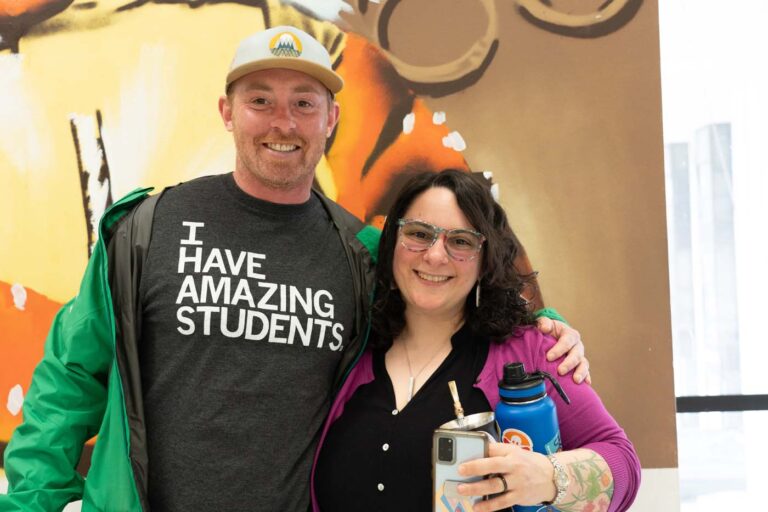
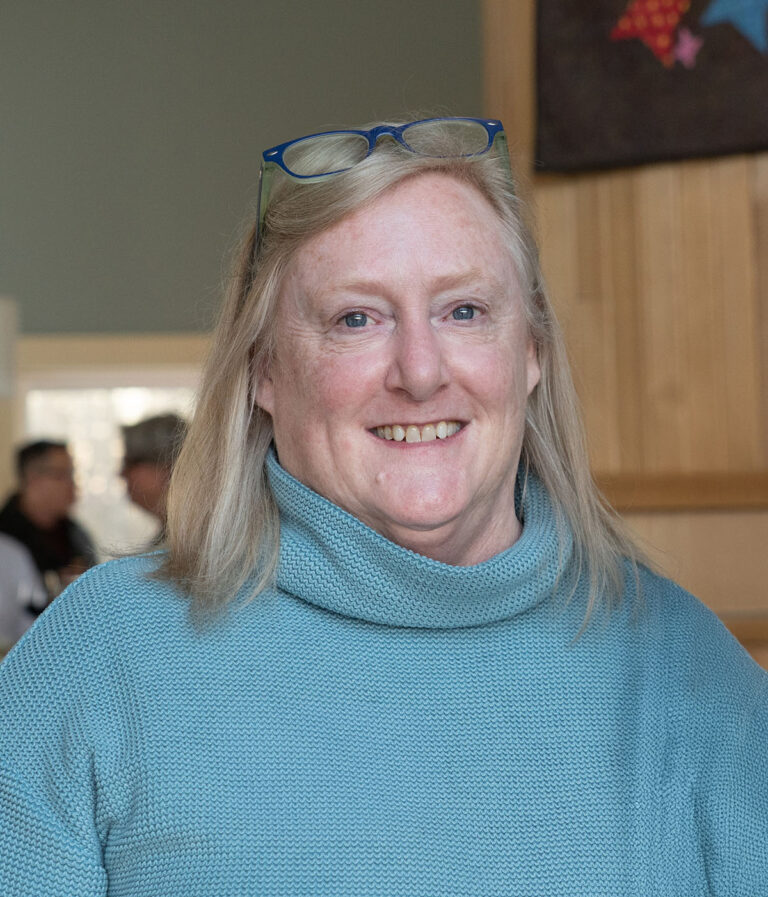
Spring Graduate Spotlight: Claire Bicknell

From Colorado to the Last Frontier
It all began with a National Outdoor Leadership School (NOLS) course for Claire Bicknell. Back in 2019, while mountaineering on the Nelchina Glacier, Bicknell’s NOLS instructor—a graduate of Alaska Pacific University—shared how her time at APU launched her career in the outdoor recreation industry. Claire was intrigued. Soon after, she moved from her hometown near Boulder, Colorado to Alaska in 2021 to pursue a degree in Outdoor Studies.
Now, after four years, countless backcountry trips, and a few Denali summits under her belt, Claire will graduate with a BA in Outdoor Studies with a concentration in snow science.
A Life Built Around the Outdoors
Claire is no stranger to mountain life. A second-generation mountain guide, she’s been skiing since she was three. “I’ve only ever wanted to ski and be skiing constantly. I love being outside and more importantly, being outside with people,” she shares with a smile.
After graduating high school during the COVID-19 pandemic, Claire took a gap year to dive into the mountains and rack up certifications, including her Level 1 Professional Avalanche Training (PRO 1) and Wilderness First Responder. These credentials allowed her to hit the ground running during her first year at APU, opening the door to early internships and field experiences.
Learning by Doing
Through the Outdoor Studies program, Claire landed an internship with the Alaska Mountaineering School (AMS), where she now teaches mountaineering and ski guiding courses. She’s summited Denali twice with her last year operating as an assistant guide instead of as an intern. During the winter, she also works for the Alaska Avalanche School and supports educational outreach for the Hatcher Pass Avalanche Center.
When asked what part of her APU experience has been the most impactful, Claire doesn’t hesitate: “The internship opportunities,” she says. “They’ve helped me grow as a student and as a guide.” Her favorite aspect of studying at APU? “The outdoor courses, especially the snow science ones, and being with like-minded people.”
Senior Project: In Between Zones
Claire’s senior project explores transitional snow layers, specifically, snow grains that lie somewhere between weak and stable. Her work asks: Can in-field techniques accurately predict whether these grains are trending toward strengthening or weakening? And how do these observations hold up when compared to the more objective snow stability models developed outside the field?
Much of her fieldwork took place at Skeetawk, where she used various observational techniques, including analyzing grain shape. “Sharper corners usually indicate weakening grains, while more rounded grains suggest stabilization,” she explains. Based on her findings, she offers practical suggestions for improving in-field snowpack assessments.
Claire’s work also incorporates insights from interviews she conducted during Snow Science II (one of her favorite classes). Many practitioners she spoke with were critical of the current mixed-form grain classification system, calling it unreliable and difficult to apply in the field. Some also argued that focusing too much on the directional evolution of grains might distract from more important indicators of avalanche risk.
Claire hopes to continue refining this work with the goal of submitting it to the 2026 International Snow Science Workshop in Whistler.
Looking Ahead
After graduation, Claire will continue her work with AMS and begin pursuing certification through the American Mountain Guides Association (AMGA).
Her advice to other students? “Focus on school, but remember to go outside and have fun too because that’s why we’re here.”