From Steam to Spirit: Building Sugpiaq Kayaks at APU
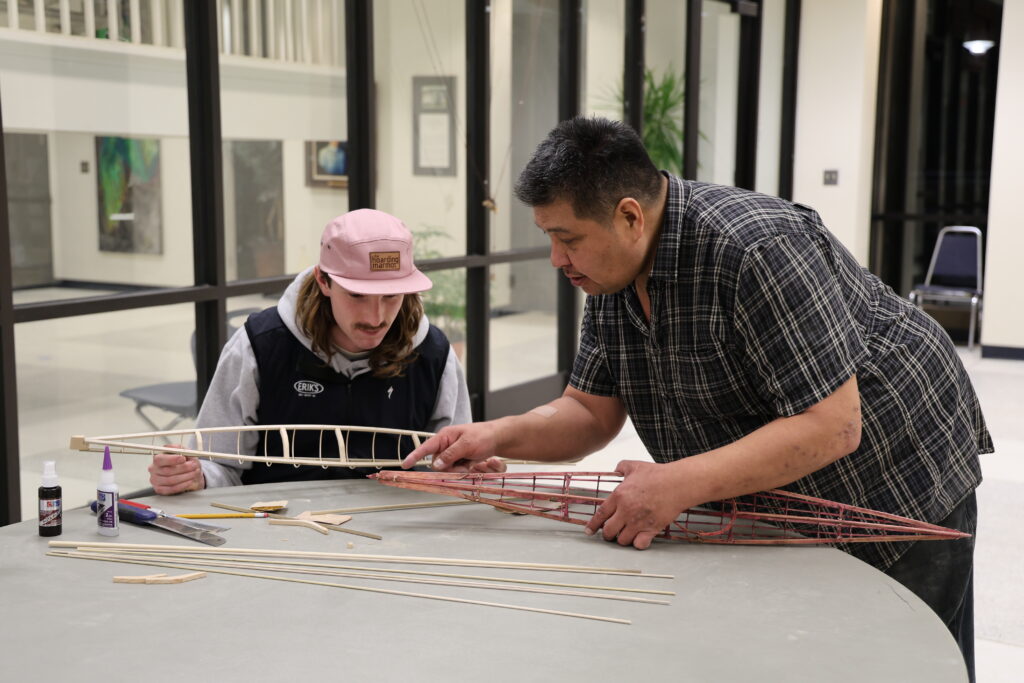


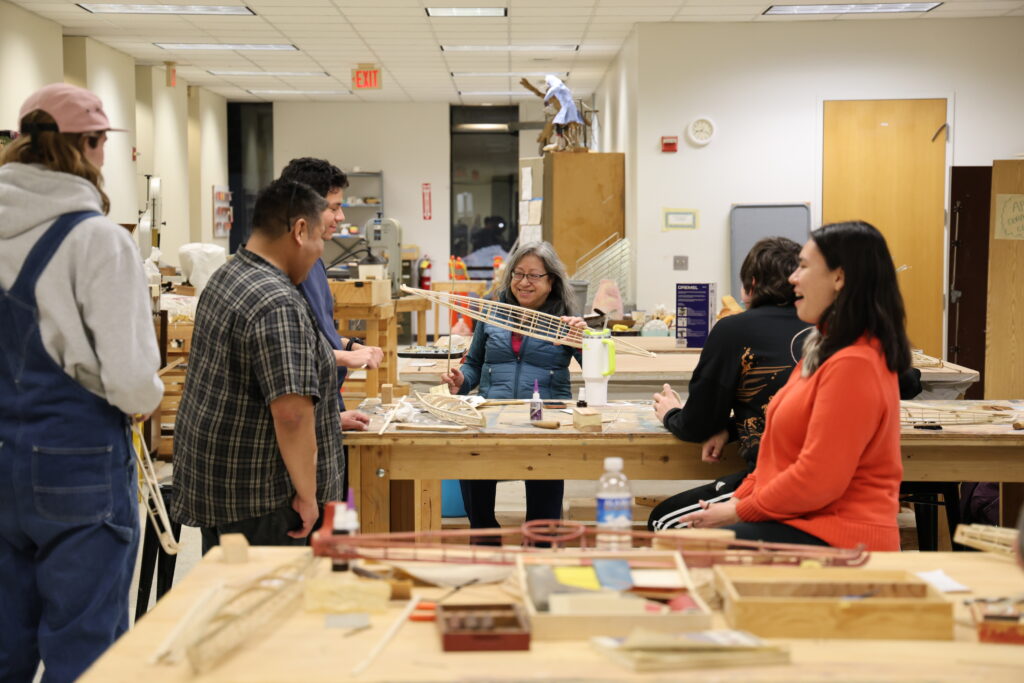


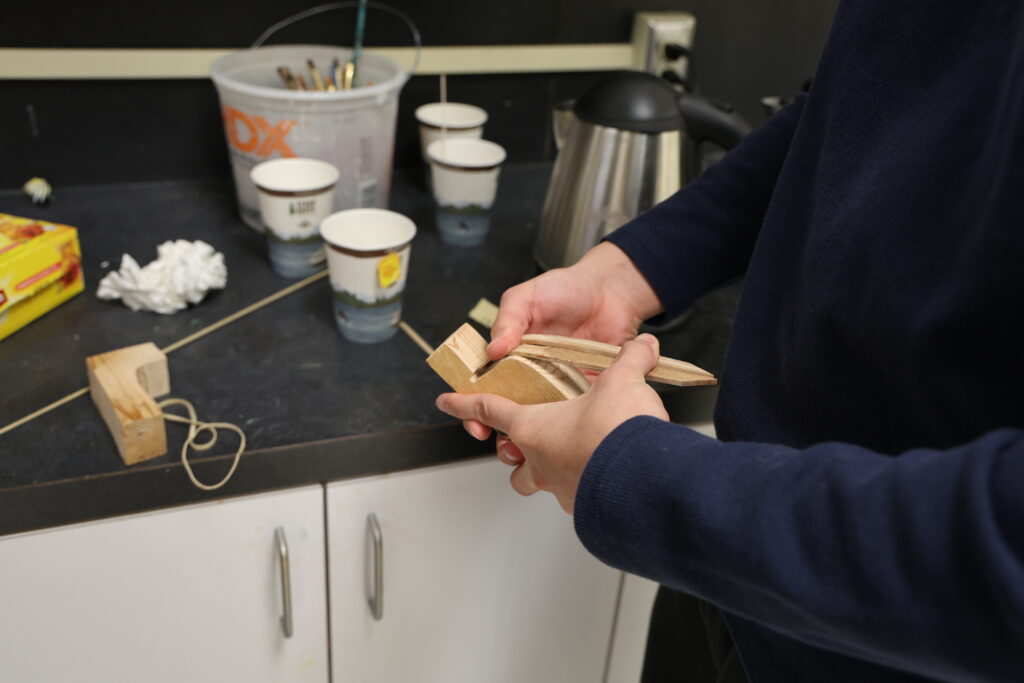

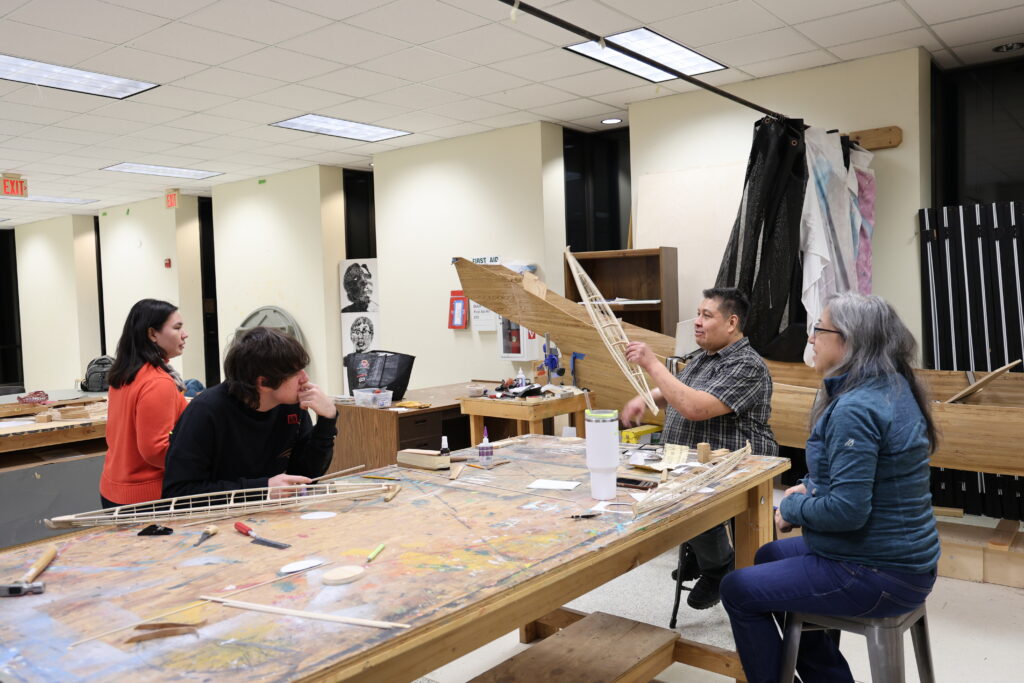
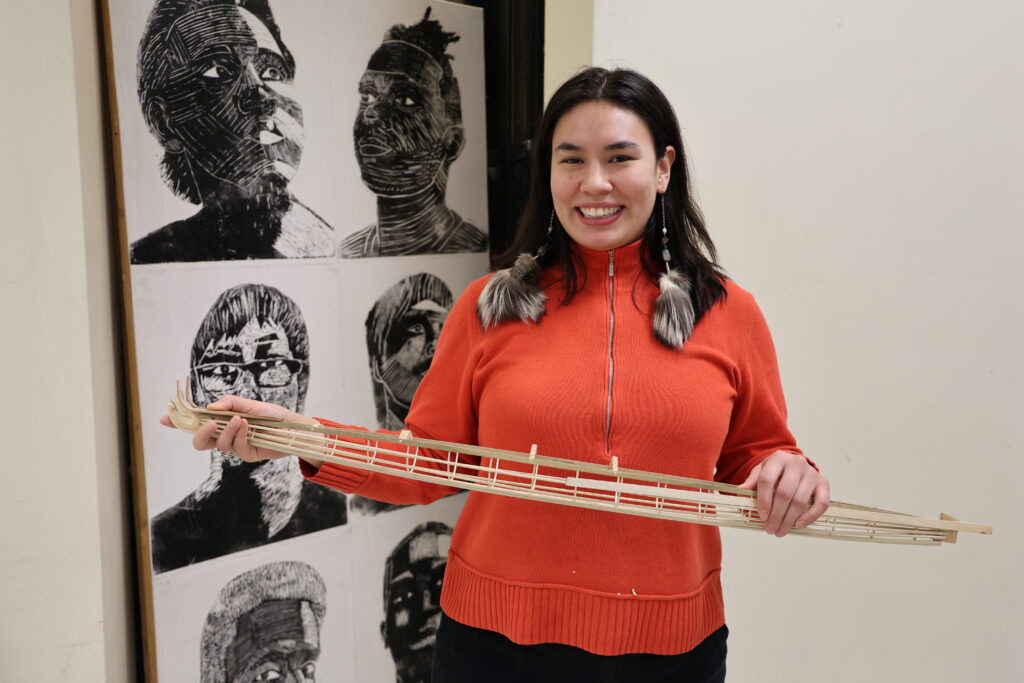
Students gently press steamed wooden strips into bent positions, shaping what will become the curved bifurcated bow of their model-sized kayaks, or qayaq in Sugpiaq. The group is a mix of Alaska Pacific University students and community members enrolled in an Indigenous Boat Design Block Course taught by Andrew Abyo, a Master Boat Builder specializing in traditional Sugpiaq art and history.
When asked what he enjoys most about teaching, Abyo smiles. “It’s great to see people come in who’ve never done it before and then enjoy the process and enjoy learning new things.”
Students describe the experience as meditative. Many say the hands-on nature of the course is their favorite part.
“I love how hands-on it is. Watching something go from a simple sketch to something you can actually hold in your hands. Getting to take it home makes it even more meaningful. It feels really special to connect to my culture in this way and to see how we’re actively keeping those traditions alive,” reflected APU student Beverly Schindler, an Iñupiaq originally from Selawik, Alaska.
She continued, “Knowing there are still people out here doing the work, carrying the knowledge forward, is incredibly inspiring. I can’t help but feel proud of Andrew. There aren’t many kayak makers out there, and to see him pass on his craft so generously. I knew I had to take that opportunity.”
Andrew Abyo is a Sugpiaq carver born in Anchorage and raised in the Bristol Bay village of Pilot Point. His intricate artwork reflects deep historical research and traditional knowledge. Though his journey into carving began unexpectedly, his commitment grew from a desire to help his three children, and others, better understand the richness of Sugpiaq culture.
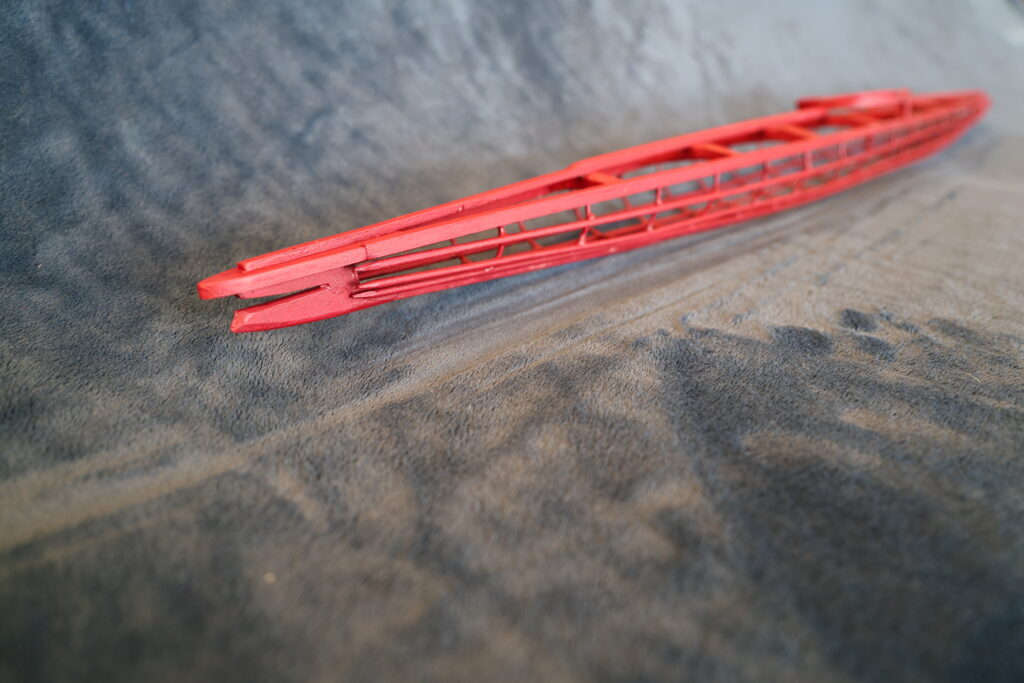
Over the month-long course, students build a 41-inch model kayak, crafted at 1/6 scale of a full-sized vessel. Every detail mirrors the real thing, from the structure to the design process, offering an authentic introduction to traditional boat building.
Students learn not only how to design and construct a Sugpiaq kayak, but also about the cultural teachings that surround it. Abyo explains that the frame is traditionally painted red to symbolize the skeleton of a living being, as the completed kayak is understood to be a living animal. When it is covered with animal skins, that final step represents its transformation, thus marking the moment it fully becomes an animal.
It’s this deeper meaning — the understanding that each piece carries both function and spirit — that resonates strongly with students in the class. Student and community member Marie Swetzof, who was born on St. Paul Island, is no stranger to kayak building. She has previously made two model kayaks, though this was her first time building a Sugpiaq-style qayaq. Like others in the class, she found the experience grounding. “It’s very relaxing and calming for me,” she said.
Another student, David Karabelnikoff, has even built a full-sized kayak and plans to use his completed model from this class as part of his graduate school application. He hopes to pursue kayak design through a Master of Fine Arts program, continuing to blend traditional knowledge into his academic journey.
In a previous interview with a student at the University of Alaska Fairbanks, Abyo reflected on his purpose as an instructor. “For one, they get to learn new things and, for me, it’s a way for me to pass on the knowledge that I learned, and it’s a way to keep the traditions alive in the culture. And, not only that, it helps bring it back. So that’s my view — is to share what I learn.”
Back in 2005, Abyo was working a nine-to-five job when carving first entered his life. His mother had signed him up for an atlatl-making class at the Alaska Native Heritage Center, which was a course actually taught by his uncle. “I didn’t grow up carving, so that was my first time,” he recalls. “I discovered it was natural inside of me and I’ve never looked back.”
From there, Abyo immersed himself in research, studying cultural books and museum artifacts to refine his craft. Along the way, he deepened his understanding of Sugpiaq history. “Wow… we have a lot to be proud of,” he says. He points to the ingenuity of traditional tools, like the bentwood visor, which has more than eleven uses, as evidence of the culture’s innovation. He also learned from elders and others knowledgeable in traditional building practices.
Today, Abyo specializes in Sugpiaq kayaks (both full-size and model), bentwood visors, atlatls, harpoons, paddles, and traditional games. While the kayak holds a special place in his heart, he says bentwood visors are his favorite to create. His carvings are recognized as museum quality, with pieces held in collections around the world.
Each year, Abyo leads cultural presentations in schools and culture camps, teaches university- level classes and workshops, and demonstrates his craft at the Alaska Native Heritage Center in Anchorage. Sharing Sugpiaq culture through teaching is central to his mission as an artist.
“I didn’t know what I was gettng myself into and wasn’t sure about woodworking class originally,” Marie admitted, “but I’m so glad I took the class.”