Bristol Bay Guardians Initiative Launches To Strengthen Alaska Native Land Stewardship And Sustainability
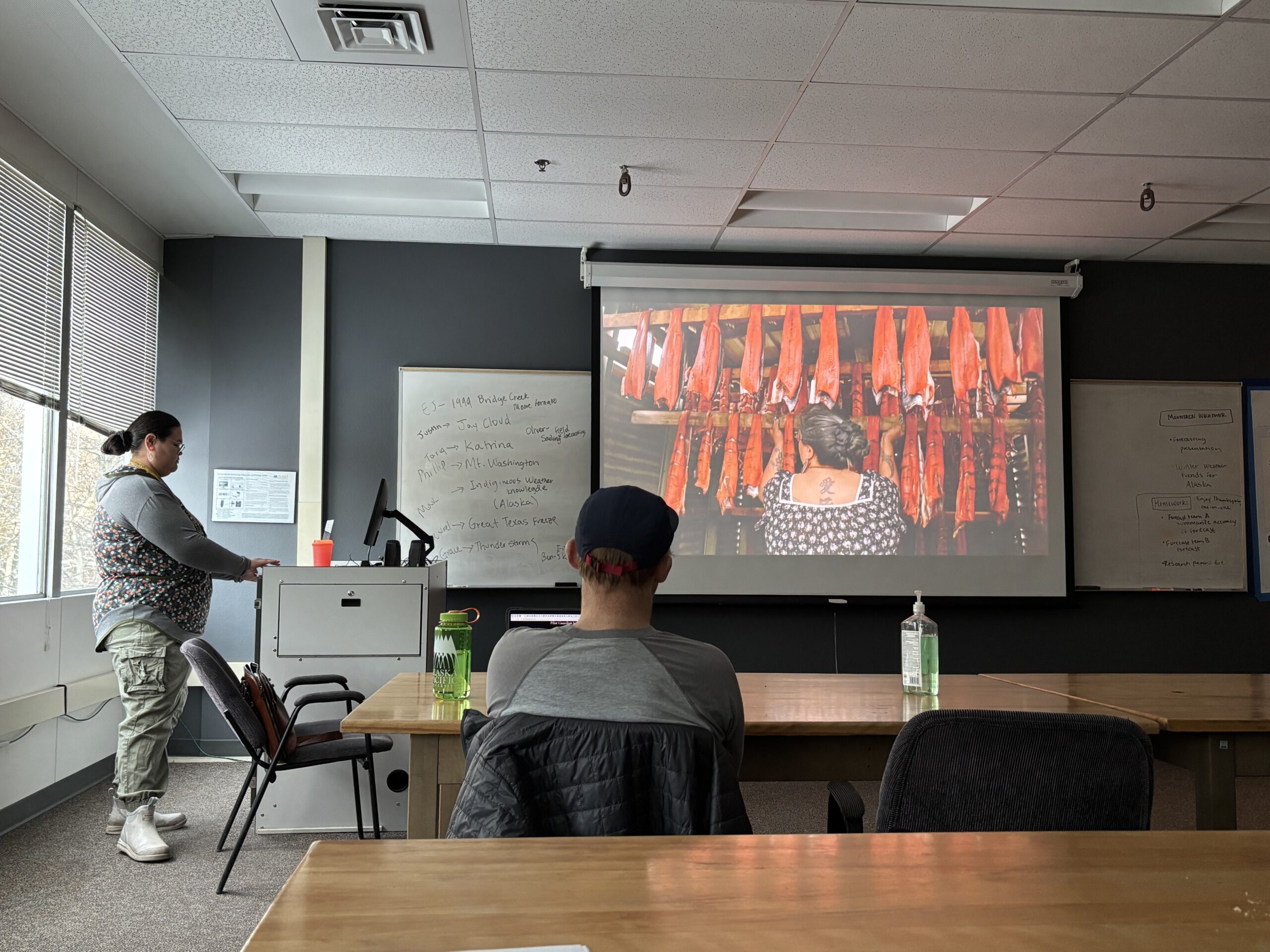
Analouise guest speaking to an APU landscape management class about the Guardianship Initiative.
The Kvichak River weaves through swaying fireweed and birch thickets, moving steadily toward the ocean. Eagles soar overhead, and brown bears follow caribou trails across braided tundra. As the Kvichak meets Bristol Bay, so too does the Nushagak River, feeding a body of water that supports the largest sockeye salmon run in the world—46% of the global wild sockeye harvest. While sockeye are the most prolific, all five species of Pacific salmon spawn and rear in this watershed, sustaining a rich web of wildlife, people, and fisheries.
This is the homeland of the Yup’ik, Dena’ina, and Sugpiaq peoples, who are some of the last intact, sustainable salmon-based cultures on Earth. Here, land and water are inseparable from Alaska Native lifeways, shaped by millennia of stewardship and cultural wisdom. It is not merely a region; it is a living relationship between nature and people. That relationship is being renewed and strengthened today through the Bristol Bay Guardians Initiative.
This initiative is a partnership between the Igiugig Village Tribal Stewardship Office (TSO), The Nature Conservancy, Alaska Pacific University (APU), and others to establish a regional Indigenous Guardians network for Bristol Bay, with an initial focus on subregional capacity in the Lake Iliamna and Lake Clark Region. Inspired by successful Indigenous Guardians programs in Canada, the initiative supports Indigenous-led stewardship and collaborative partnerships rooted in cultural knowledge and ecological sustainability.
Alaska Pacific University’s Role
- Building the network’s governance structure and operational framework
- Strengthening partnerships with Tribal organizations, agencies, and conservation groups
- Increasing community engagement through workshops, conferences, and training
- Enhancing administrative systems to support long-term sustainability
APU’s efforts will be led by Analouise Hoseth, Community Engagement and Stewardship Coordinator. Analouise, whose Yup’ik name is Tutgarayaq, grew up in Dillingham and brings a personal connection to the region. “I’m most excited about advocating for our plant and animal relatives and those that have no voice,” she shares. “And I’m thankful to create uplifting opportunities for youth in my community—opportunities I didn’t have growing up.”
What Will the Indigenous Guardians Do?
The Guardians will fill critical gaps in climate adaptation and environmental monitoring, revive dormant activities, and amplify existing environmental monitoring initiatives. They’ll be trained in technical skills like water quality monitoring and data collection, while also learning traditional knowledge from community members, thereby blending science and culture in powerful ways.
- Regional wildfire resilience planning
- Atsalugpiat (salmonberry) monitoring
- Aerial surveys of salmon spawning habitat
- Streamgage reestablishment
- Incorporating place names and Alaska Native languages into environmental data collection applications
More than a conservation effort, this initiative is about self-determination, resilience, and opportunity. By empowering Alaska Native communities to lead stewardship efforts, it supports not only ecological health but also economic and cultural well-being, creating a more sustainable future for all.