Guiding the Narrative: Ethical Guide Training in Indigenous Representation in Alaska Tourism

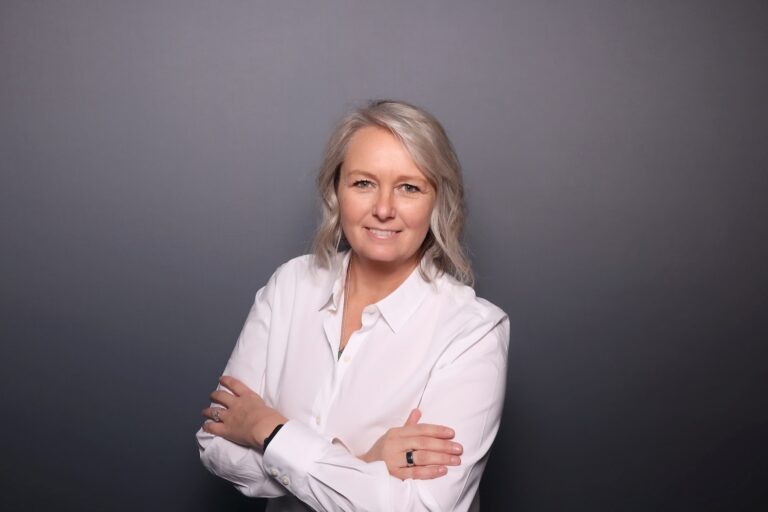
By day, Heather Reiss teaches elementary students about environmental science. By night, she researches Alaska Native representation in tourism. This summer, she completed her Master of Science in Outdoor and Environmental Education (MSOEE) at Alaska Pacific University, earning her degree after four years of thoughtful, community-centered research. “I felt very human being with APU,” Reiss reflected. “That meant a lot because I was a mom doing this huge project, taking time away from my family.”
Research Rooted in Representation
Reiss’s thesis explored a critical topic in Alaska, which is a state whose tourism industry brings in millions of visitors and dollars each year. After more than two decades working as a naturalist and guide, she saw firsthand how a lack of informed Indigenous representation pervades educational tourism.
Motivated to change this, Reiss developed a training curriculum for tour guides and naturalists designed to return the power of storytelling about Alaska’s Indigenous peoples to Alaska Natives. “It took a lot of time, multiple revisions, and thoughtful feedback from Alaska Native collaborators,” she said. “It was a challenging project, but one I’m really proud to have completed.”
A Classic Denali Love Story Leads to APU
Reiss first came to Alaska in 2011 to work as a tour guide in Denali National Park, where she quickly fell in love with both the place and the work. She has since spent her summers as the lead naturalist at Doyon’s Kantishna Roadhouse, moving to Alaska full-time in 2019.
Now based in Palmer, Reiss teaches at APU’s Kellogg Field School, where her 8-year-old son is also a student. The MSOEE program, also based out of the Kellogg Campus, was a natural fit. “The community here really stands out,” she said. “Everyone knows you on a few different levels, and that support lets you dive deep into your project because people are genuinely invested in the work and in you. That’s what makes it so fun.”
Reiss entered the program intent on working with Alaska Native communities, so APU’s commitment to being an Alaska Native-serving and Tribally-governed University was another major factor in her decision to enroll.
Learning by Doing
Reiss’s undergraduate background in environmental science and geology led her into tourism almost by accident. During an undergraduate presentation, she landed her a job as a guide in Nez Perce National Historical Park. But during the COVID-19 pandemic, she realized she wanted formal training in education and set out to earn her master’s.
While students are guaranteed to earn their full tuition through a partnership with the North Cascades Institute, Reiss funded her degree through Alaska Travel Industry Association (ATIA) scholarships, earning the most scholarship awards ever given to a single applicant.
“A big highlight for me was how the MSOEE program connects classroom learning with field experience,” she said. “At APU, you might learn something one night and use it in the field the next day. That immediate, hands-on application just made so much sense to me.”
APU’s MSOEE program is one of the only programs in the country using this immersive, field-integrated learning model in the first semester.
Changing the Industry Narrative
Over years of experience, Reiss noticed that guide training often lacked context and sensitivity when it came to representing Alaska Native peoples. In an industry shaped by Western narratives, misinformation and stereotypes can spread easily, often unintentionally.
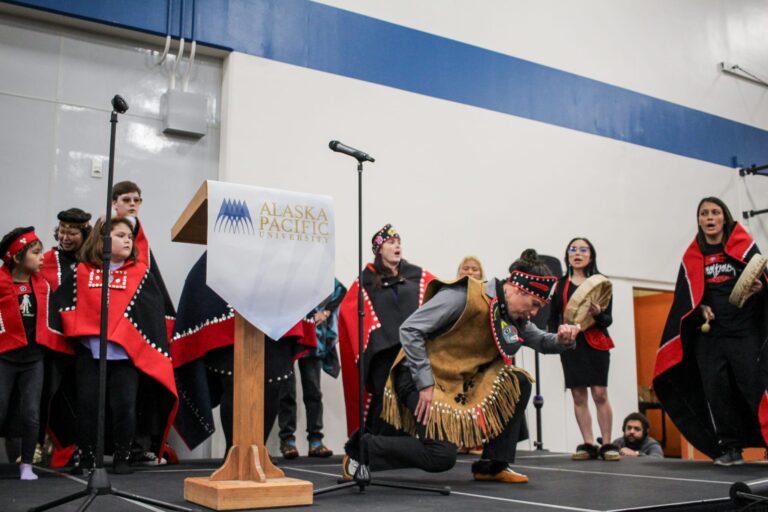
Her curriculum offers a remedy: a one-day or half-day guide training built with Ahtna, Sugpiaq, and Gwich’in partners. The course teaches professionals how to engage respectfully with Alaska Native history and culture, identify reliable information, and understand their role in shaping visitor perceptions.
“What I learned is that narrative matters—how you tell a story and where you get your information truly matter,” Reiss said. “The narratives we share about people can either help or harm them. Even a small comment can stick with someone and spread harmful ideas.”
Post-training surveys showed significant growth among participants: guides became more confident, more accurate, and more aware of the cultural weight of their words. They also reported deeper understanding of Indigenous knowledge, the impacts of colonization, and the Alaska Native cultural connection between land, language, and identity.
“Tourism shapes how visitors see Alaska,” Reiss said. “Guides play a role in protecting both cultural narratives and the landscapes themselves.”
The Support Behind the Work
Throughout her project, Reiss’s APU advisors encouraged her to push boundaries. “They told me it’s okay to make a point that might seem political,” she recalled. “They helped me find the courage to call out bad practices in the tourism industry.”
Her advising committee members were instrumental in helping her refine and complete the work. “When I started submitting final drafts, they were so supportive and quick with feedback,” Reiss said. “Their encouragement helped me push through those last challenging moments. I felt so supported that quitting never felt like an option. I knew I could do it.”
She hopes that the curriculum she created can be a community tool and a learning model for tourism outfits throughout the state. For questions about her research or to request a copy of the curriculum, contact Heather Reiss at hreiss@alaskapacific.edu.