A Living Legacy: The Orchard of Dan Elliott
A Living Legacy: The Orchard of Dan Elliott
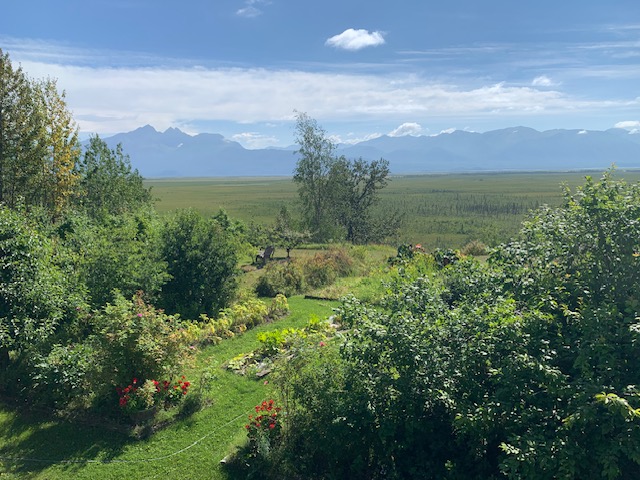
From the Dan Elliott Memorial Garden, the Matanuska-Susitna Valley stretches wide beneath the watchful gaze of Pioneer Peak (Ahtna: Tnel’aay; Dena’ina: Dnal’iy). Hundreds of shimmering pools dot the valley floor as the Knik River meanders toward Anchorage, and on clear days, Mt. Susitna reclines to the west, peacefully framing the horizon.

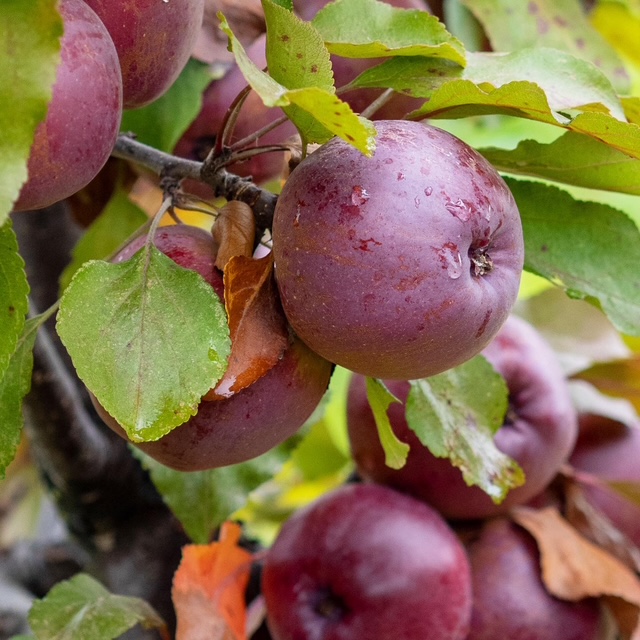
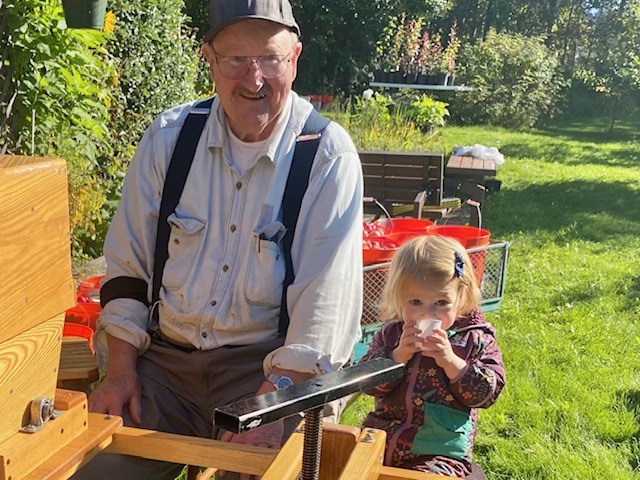
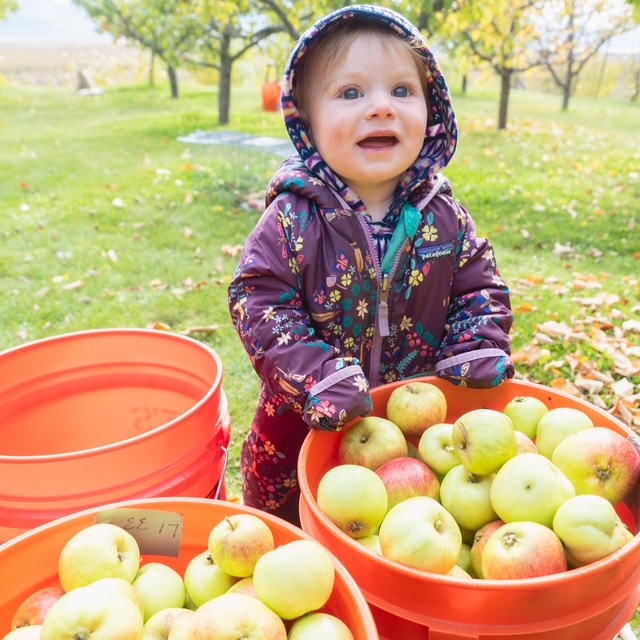
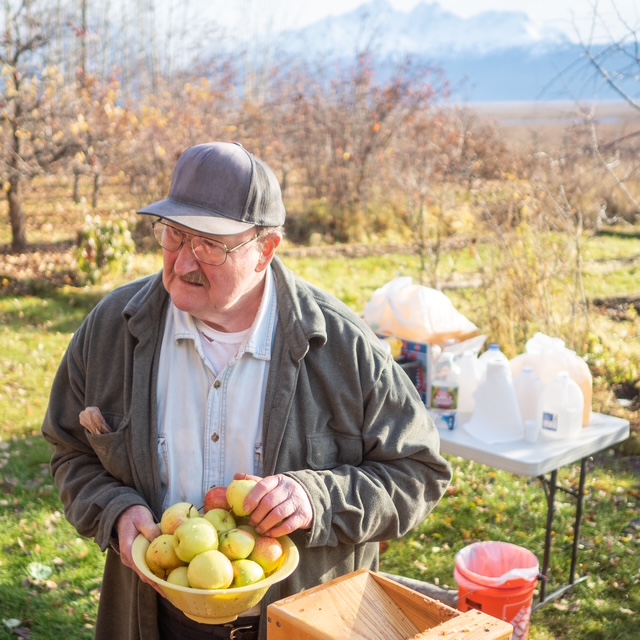
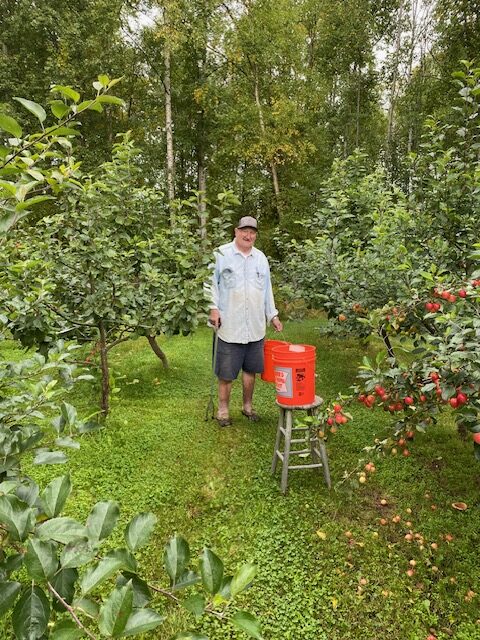
These grand vistas greet visitors at the edge of the orchard—but the real magic lies within. Nearly 200 apple trees, alongside pears, cherries, berries, vegetables, and native plants, fill the garden with color, scent, and life. The orchard is the legacy of Dan Elliott: a teacher-turned-trapper who planted his first trees nearly 30 years ago just outside Wasilla. Dan passed away in December, leaving behind his wife Marion and son Will Elliott, an assistant professor and director of Alaska Pacific University’s Early Honors program.
This year, Alaska Pacific University’s Spring Creek Farm partnered with the Elliott family to help steward the orchard after Marion expressed a need for support. “Taking care of these trees is more than a one-person job,” says Spring Creek Farm Manager Leah Corbin. “This is Dan’s legacy, and I really want to do it right. He held so much knowledge, and Marion is working hard to pass that along. We’re doing everything we can to learn and carry it forward.”
This partnership is also expanding learning opportunities for APU interns, who are gaining hands-on experience beyond traditional vegetable farming. Corbin hopes the orchard will inspire the creation of a similar one at APU’s Kellogg Campus.

Community members can enjoy the fruits of the orchard through Spring Creek Farm’s weekly Wednesday farmers market at APU or by joining the farm’s Community Supported Agriculture (CSA) program.
Dan’s love for apples was simple: “Apples taste good,” his son Will recalls with a smile. But there was a deeper reason, too. “Apples are something where you bring a lot of knowledge and care to bear, and then you get a really big return.”
That philosophy began in a modest garden by a whistle-stop cabin north of Talkeetna, where Dan raised his family. After moving to Anchorage for Will’s schooling, and discovering he couldn’t grow apples there due to lack of space, the family relocated to Wasilla to pursue the dream of an orchard.
“If you work at anything for 40 years, you get pretty good at it,” Will says. Dan began as an amateur grower during a time when citizen science flourished in the Mat-Su Valley. He became a central figure in Alaska’s close-knit fruit-growing community, collaborating with groups like the University of Alaska Fairbanks’ Matanuska Experiment Farm, where he helped study 600 apple trees for sugar content and cold-hardy varieties.
He traveled across North America sharing knowledge and honing his craft. His dedication helped prove that apples (and even cherries, plums, and apricots) can thrive in Alaska’s unique conditions. Apple trees, after all, demand thoughtful planning: selecting the right rootstock, managing pests and animals, and nurturing them year-round through pruning, thinning, harvesting, and winter prep.
This spring, members of the Alaska Pioneer Fruit Growers Association helped prune the trees while Corbin recovered from a torn LCL. In June, Spring Creek interns removed lower suckers to encourage strong fruiting. By late June, thinning begins; by late August, harvest is underway. The season closes with guards placed to protect the trees through the winter.
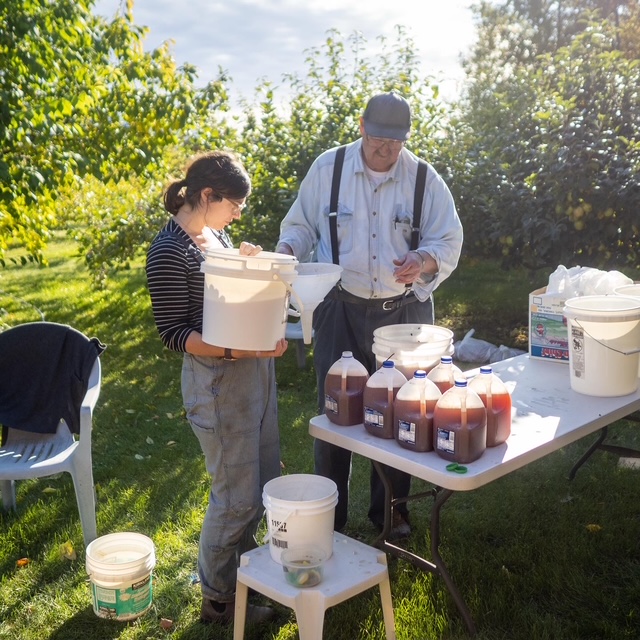
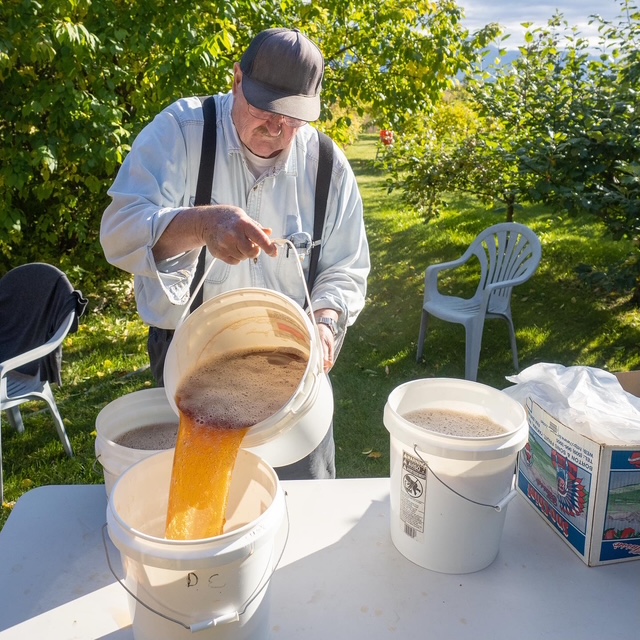
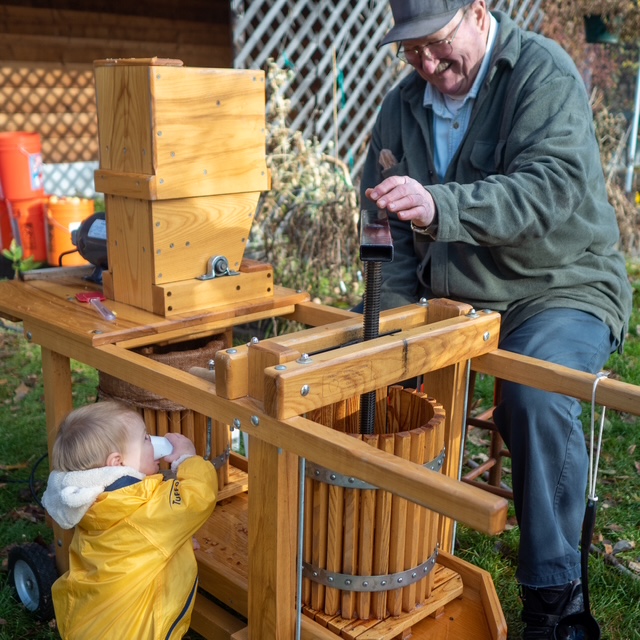
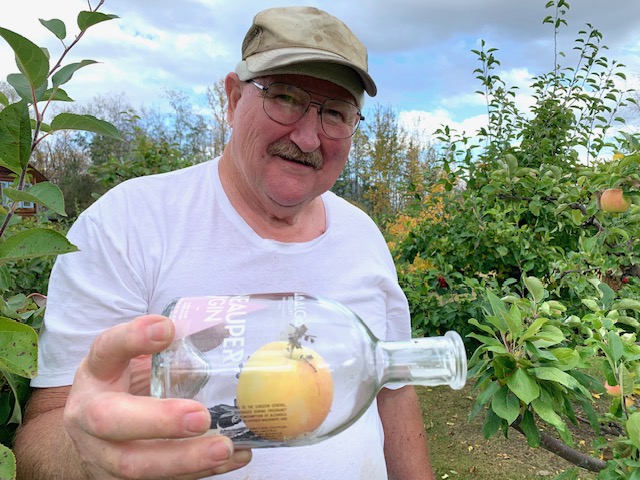
Dan and Marion’s apples reached far and wide: through CSA shares at Arctic Harvest, to Amalga Distillery in Juneau, and even into 49th State Brewing’s limited-edition Elliott’s Apple Ale. Their orchard provided everything from crisp snacks to small-batch spirits.
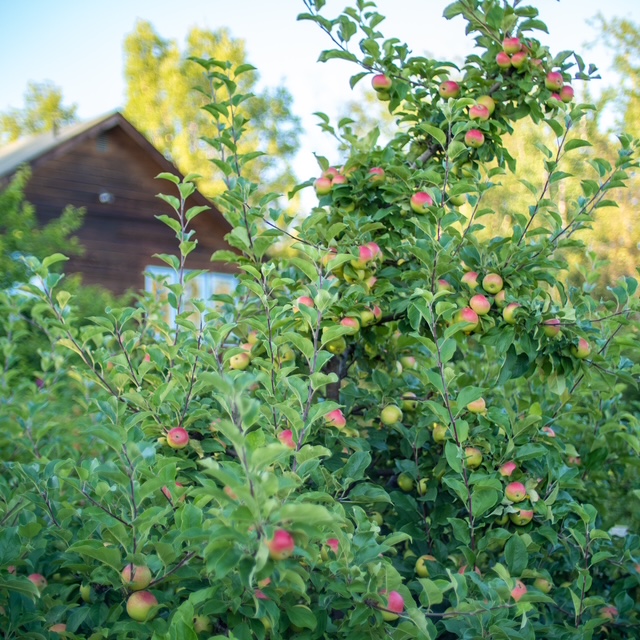
What does Will love most about the orchard today?
“Being surrounded by this forest of snacks,” he laughs. “And knowing it’s my parents’ legacy. It’s pretty impressive.”