Nursing

Preparing a Culturally Safe Nursing Workforce


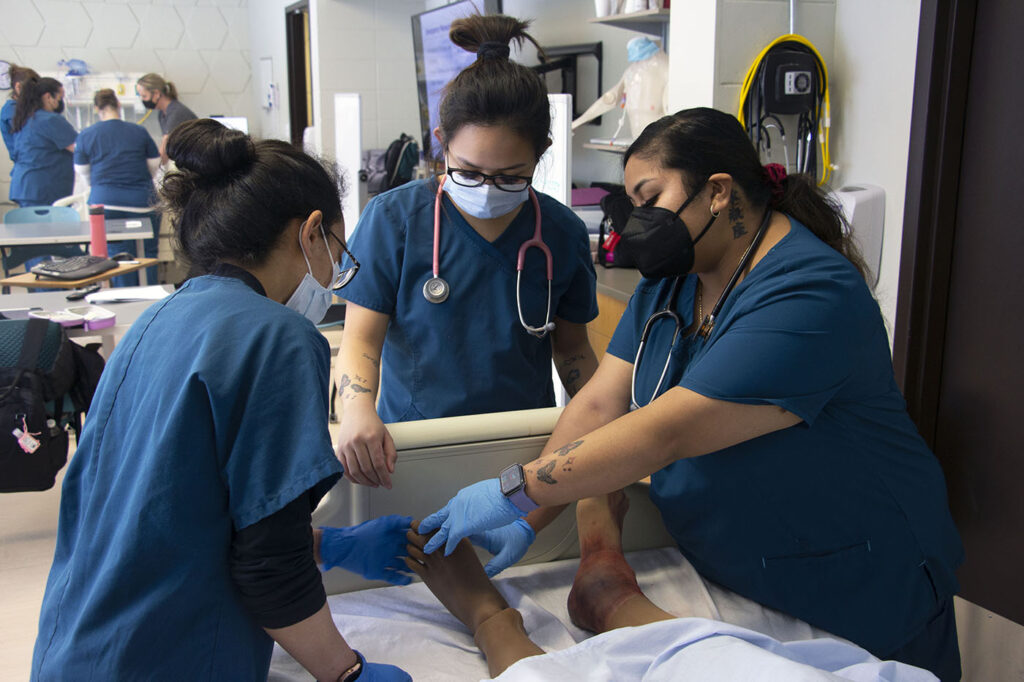
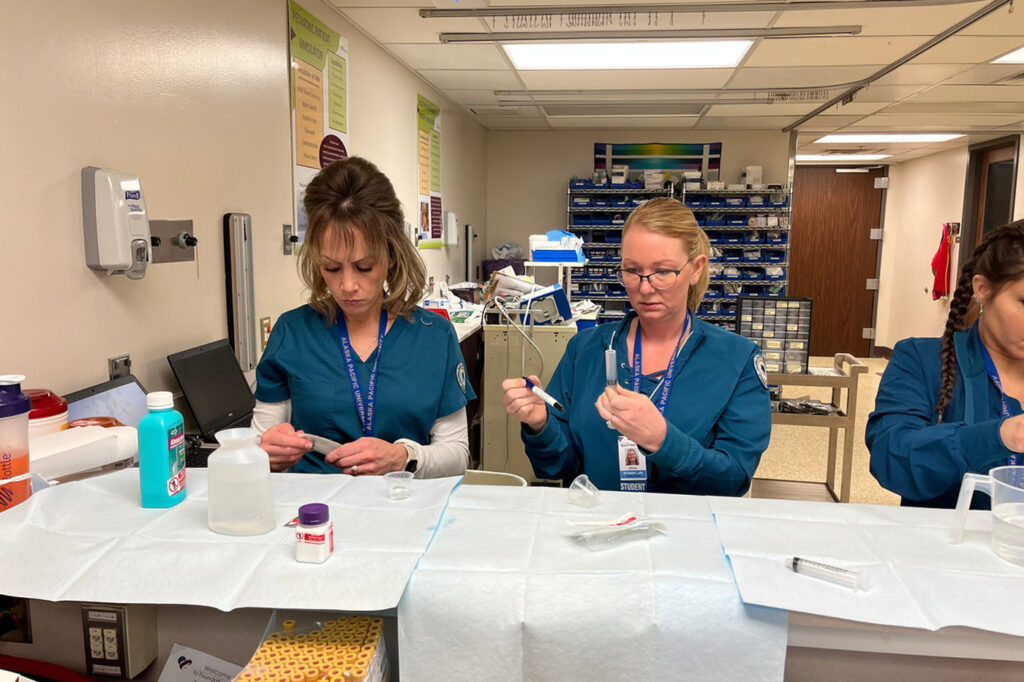
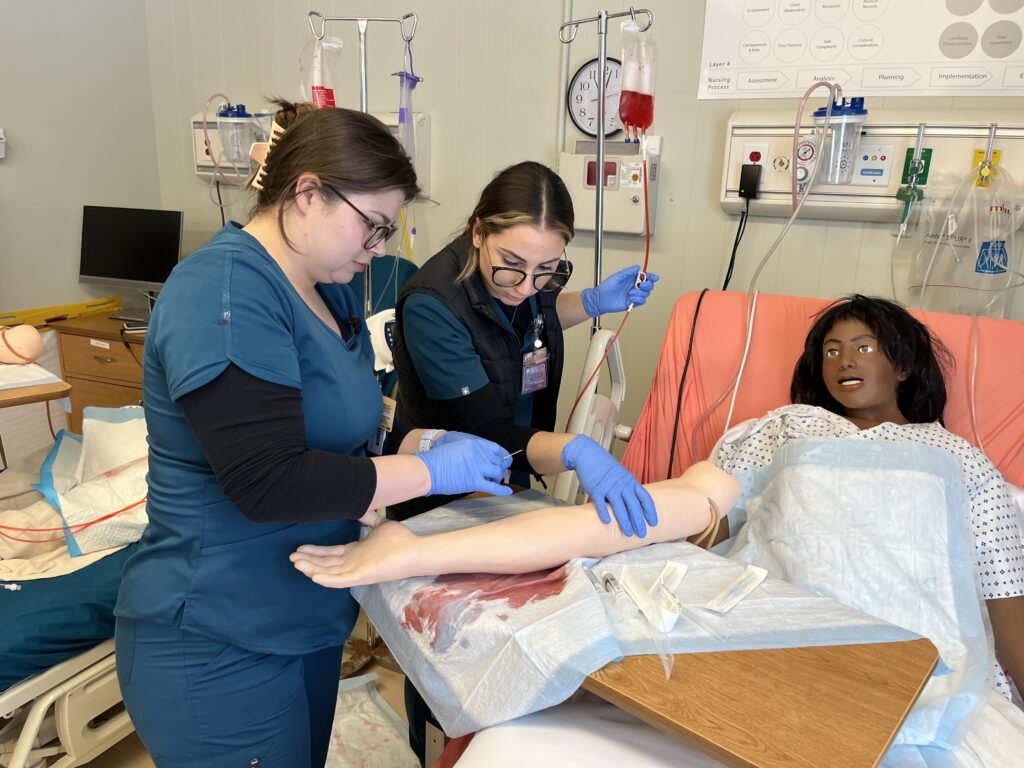
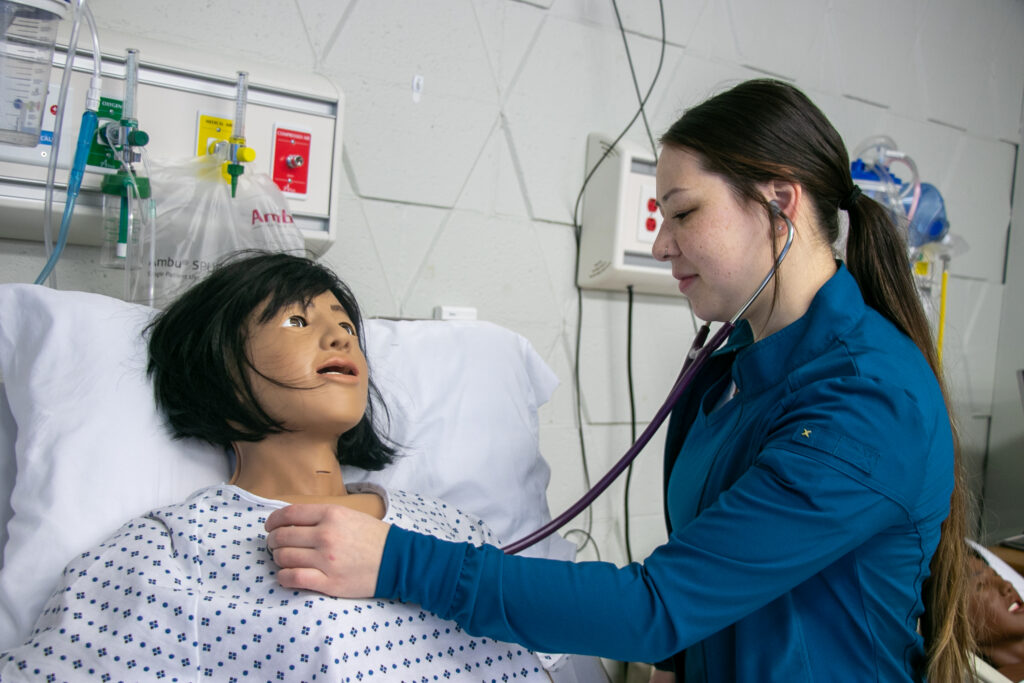
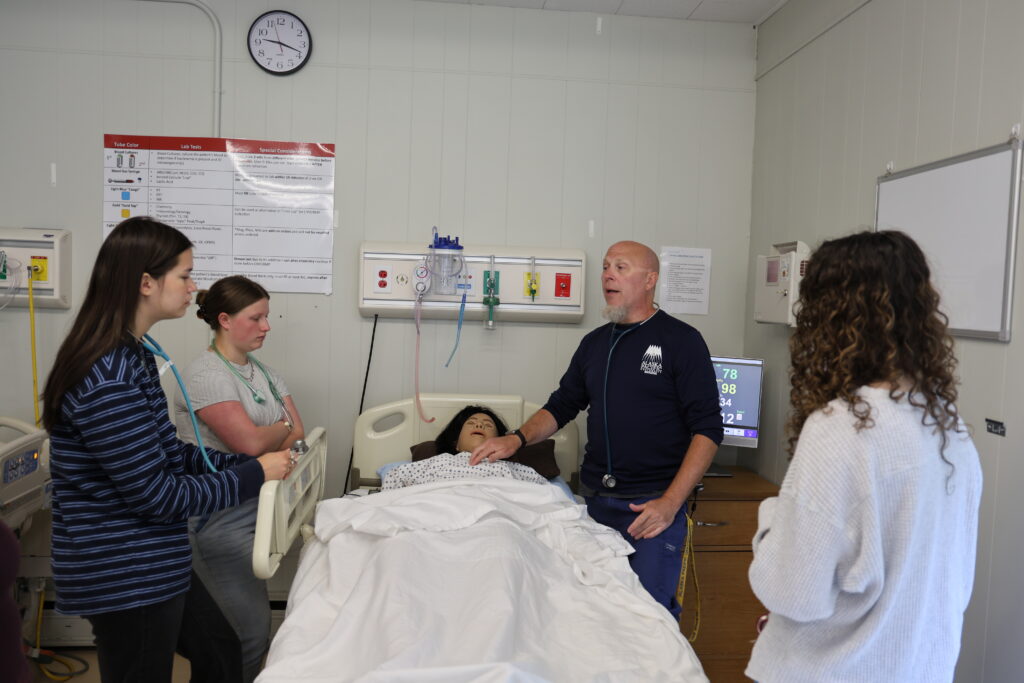
APU is committed to addressing Alaska’s healthcare workforce needs, particularly the ongoing nursing shortage, by offering flexible and comprehensive educational pathways designed to meet the diverse schedules and needs of students. Our programs prepare students to deliver culturally safe, holistic care for Alaska Native, Indigenous, and other underserved populations across the state. Cultural safety centers a patient’s cultural identity, values, and lived experiences, and requires providers to recognize power imbalances, address bias, and work to dismantle systemic racism in order to ensure respectful, equitable care. Finally, this program utilizes a state-of-the-art nursing lab, unique in Alaska, to provide students with hands-on, practical training in a realistic clinical learning environment.

In June 2023, APU started the Alaska Nursing Expansion Initiative. This project received $2,999,913.00 (83% of its total cost) from a grant awarded under the Nursing Expansion Grant Program, as implemented by the U.S. Department of Labor’s Employment and Training Administration. $599,983.00 (17%) of the project is financed by Alaska Pacific University.

Pathways


Licensed Practical Nursing

UNDERGRADUATE CERTIFICATE

The Practical Nursing program at APU delivers a curriculum focused on cultural safety and high-quality care for rural and Alaska Native populations. This certificate program provides a pathway for advancement within the nursing profession and prepares students to contribute meaningfully to the health and well-being of their communities.

APU’s LPN program is currently offered in three locations:

  • Anchorage, Alaska in partnership with Alaska Native Medical Center
  • Fairbanks, Alaska in partnership with Foundation Health Partners
  • Juneau, Alaska in partnership with Bartlett Regional Hospital

Students interested in nursing should follow the undergraduate steps for application.


APU’s Licensed Practical Nurse (LPN) program partners with Foundation Health Partners in Fairbanks, Alaska Native Medical Center in Anchorage, and Bartlett Regional Hospital in Juneau to provide hands-on clinical learning in real healthcare settings. The program prepares students to deliver culturally safe, evidence-based, patient-centered nursing care that supports the restoration, promotion, and maintenance of physical and mental health across the lifespan in a variety of healthcare environments.

Over two semesters, students develop clinical judgment and practical nursing skills while learning to provide culturally relevant care, advocate for patients, engage families and communities, and respect individual diversity. Emphasizing communication and collaboration, students gain experience working within healthcare teams to support optimal patient outcomes. Through evidence-based practice, clinical assessment, and modern healthcare technologies, students integrate traditional and academic knowledge to improve health outcomes for Alaska Native, Indigenous, and underserved populations.

Career Opportunities

  • Hospital Worker
  • Hospice Care
  • Private Clinics
  • Licensed Practical Nurse
  • Nursing School
Learning Outcomes
  • Cultural Competence & Cultural Safety
  • Professional Communication & Collaboration
  • Professional Care
  • Evidence-Based & Technology-Assisted Assessment
  • Personal & Social Responsibility
Course Delivery

Full Semester (16 weeks)

27 credits minimum are required to complete the certificate program. Studies are offered in a hybrid format:

  • On-campus
  • Online via asynchronous learning
  • On-site for clinical and lab skill practice
Major Studies
  • Culturally Safe Foundations of Practical Nursing
  • Culturally Safe and Holistic Nursing Care of Adults
  • Maternal Child Culturally Safe Care
  • Pathopharmacology for Licensed Practical Nurses
  • The Nursing Profession – Quality, Ethics, Legalities, and Policy for Licensed Practical Nurses
  • Practical Nursing Clinical Concentration – Preceptorship
  • Culturally Safe Health & Wellness
  • Application
  • Application Fee*
  • Official Final High School Transcript**
  • Official College Transcript(s)
  • Prerequisite Coursework
  • Proof of Clinical Experience
  • Interview with Nursing Faculty
  • If accepted, additional requirements may apply

*Fee waiver available for those who qualify
** If less than 24 college credits earned

Minimum cumulative GPA: 2.5 or higher

  • Human Anatomy & Physiology I with lab
  • Culturally Safe Healthcare: Inquiry & Practice

Proof of Clinical Experience can include:

  • Certified Medical Assistant
  • Certified Nursing Assistant
  • Certified Health Aid
  • Paramedic
  • EMT
  • Dental Health Aide
  • Other experience may be accepted (please contact the Office of Admissions)

Transfer credits may be used to meet prerequisites; however Culturally Safe Health Care is a prerequisite for all APU nursing students and must be completed at APU. Prerequisite coursework completed more than ten (10) years ago is not eligible for consideration for admissions into APU nursing programs. All prerequisite coursework must be completed with a grade of “C” or higher and be eligible for transfer to APU if completed at another university.  Nursing Major courses are not eligible for transfer. 

The Alaska Board of Nursing in keeping with statutes AS 08.68.100(a) and AS 08.62.290 and regulations 12 AAC 44.010 and 12 AAC 44.055, provides oversight and annual approval of nursing programs. All records were found to be in order. The Alaska Board of Nursing has issued full approval of APU’s Practical Nursing (LPN), ADN and RN to BSN programs for 2025. Additionally, the Board approved the development of an LPN to RN bridge program. The Board fully supports the continuation of the nursing education program at Alaska Pacific University.

The LPN program is accredited through:

Accreditation Commission for Education in Nursing (ACEN)
3390 Peachtree Road NE, Suite 1400
Atlanta, GA 30326
(404) 975-5000

What is a Licensed Practice Nurse and what can I do with this certificate?

This certificate program meets the requirements set by the Alaska Board of Nursing for licensure as a Practical Nurse. Students develop essential skills through nursing skills and simulation labs, classroom instruction, and clinical experiences in hospitals, nursing homes, and clinics. The program prepares graduates to sit for the NCLEX-PN national examination and pursue licensure as a Licensed Practical Nurse (LPN). With licensure, LPNs provide direct patient care, deliver routine nursing services across diverse healthcare settings, and support patient health education. They often assist Registered Nurses with more complex, non-routine care. Typical responsibilities include taking vital signs, administering medications, giving injections, preparing patients for examinations and procedures, and documenting patient information in medical records.

Where is this program offered?

APU’s LPN program is currently offered in Anchorage, Fairbanks, and Juneau. Students must be able to attend in-person labs and clinical rotations at the location to which they apply and are admitted.

When does the next cohort start and what is the application timeline?

Each program location starts in the fall term with an application deadline of May 1 and a notification date in June.

How is the program structured? If you get in, what is the commitment?

The program is 2 semesters long, a total of 27 credit hours and will be offered in a hybrid format. Lectures will be online and recorded to offer students a flexible schedule. Students will be required to meet in person at their program location facility several times a week, depending on location. APU Nursing faculty does not make the clinical schedule, it is dependent on our clinical partners and may include weekend or overnight shifts.

I work full-time, can I still do the program?

This is a full-time program. Although offered in a hybrid format, students should expect regular in-person attendance at the clinical or educational partner site for lab work and must be available for clinical rotations, which may include weekend or overnight shifts. In addition, each class hour in nursing typically requires approximately three hours of homework, reading, and study. Even when not on site, students should plan to dedicate significant weekly time for independent learning and preparation.

Pre-Requisite Coursework

Admission to the LPN program requires the completion of HS 20500 Culturally Safe Healthcare (4 Credits) and SC 26000 Human Anatomy & Physiology (w/ a lab) or equivalent. Both courses must be completed with a C or better and completed within the last 10 years.

How do I apply?

Read the application breakdown here. Apply online with your $35 application fee. Click here to apply.

Do I need internet?

At home (or another location) the course will require the following:

i. A reliable computer & access to Blackboard
ii. A recent web browser
iii. An Internet Service Provider (ISP)
iv. An internet connection
v. Computer microphone, speakers, and camera

How much does the program cost?

Costs for the LPN program can be found on the Cost of Attendance page under Undergraduate Student Costs. All costs are estimates and may vary, as some courses include additional fees such as lab fees that are not reflected in standard mandatory fee listings. Basic cost of attendance information is updated annually on the Admissions and Costs page.

Are financial aid and scholarships available?

Yes. Students should begin the financial aid process first by filling out the Free Application for Federal Students Aid (FAFSA). Additionally, APU offers several other resources for scholarships and financial aid. View a list of all APU scholarships. Then, apply to all of your scholarships in one place through the The Alaska Pacific University One Application (OneApp) .

I still have more questions, what should I do?

Contact the APU Office of Admission at admissions@alaskapacific.edu or the APU Anchorage Nursing Department at nursing@alaskapacific.edu.

How does licensure work? Can I apply for licensure outside Alaska?

Upon successful completion of all requirements of the APU Practical Nursing Certificate Program, the student will file a form in the state in which he/she wishes to take the national nursing licensure examination. These forms are available online.

2. The APU Registrars’ Office sends the verification form to the Alaska Board of Nursing, assuring that the student has met all requirements to take the NCLEX- PN examination.

3. It will take at least six (4-6) weeks after graduation for the posting of the information necessary for the affidavit and testing attestation to be completed.

If a student is interested in licensure in another state, they are responsible for contacting that state’s Board of Nursing office for information. A list of state licensure requirements is available on the National Council of State Boards of Nursing (NCSBN) website.

Students requiring accommodations will refer to the State Board of Nursing for information.

Practical Nursing to Registered Nurse Bridge Program

LPN bridge to RN Associate of nursing

  • This program provides a streamlined pathway to the Associate Degree in Nursing (ADN) for licensed practical nurses in Alaska
  • Designed for individuals with an unencumbered Practical Nursing license seeking advancement to RN licensure
  • Students are taught and supported by dedicated, knowledgeable, and nationally recognized faculty
  • The ADN program prepares nurse generalists with foundational skills for holistic, culturally safe care across Alaska’s diverse communities
  • Students complete required foundational coursework and a nursing transition course before entering ADN coursework and clinical rotations

The LPN to RN Bridge Program is an accelerated pathway to the Associate Degree in Nursing (ADN), preparing students for licensure as Registered Nurses. Coursework includes hybrid classes along with required on-site clinical experiences offered at selected instructional sites across Alaska. Applicants indicate a preferred location on their application; however, placement is not guaranteed due to limited space, and students must be able to attend all in-person coursework and clinical rotations at their assigned site. Students must complete all foundational courses and NUR 11500 (LPN to RN Transition) prior to beginning nursing coursework. Transfer credit may be considered for equivalent foundational coursework completed at an accredited institution with a minimum grade of C, though coursework completed more than ten years prior, as well as nursing major courses, is not eligible for transfer.

The eligibility criteria to apply for admission to the LPN to RN Bridge Program are:

Eligibility
  • Applicants must have a high school diploma or equivalent (GED).
  • Applicants must have graduated from a practical nursing associate degree or certificate program from an accredited practical or vocational nursing program.
  • Applicants must have an unencumbered Alaska LPN license.
  • Applicants must have a 2.5 cumulative grade point average (GPA) or higher.
  • Applicants must be able to attend clinical activities and other coursework in person at one of the designated instructional locations


Transfer credits may be used to meet prerequisites; however Culturally Safe Health Care is a prerequisite for all APU nursing students and must be completed at APU. Prerequisite coursework completed more than ten (10) years ago is not eligible for consideration for admissions into APU nursing programs.  All prerequisite coursework must be completed with a grade of “C” or higher and be eligible for transfer to APU if completed at another university.  Nursing Major courses are not eligible for transfer. 

Application Requirements
  • Completed application form submitted by the deadline noted on APU website.
  • Official transcripts from all previously attended institutions must be submitted.
  • If an applicant has less than 24 college credits, they must also submit high school transcripts.
  • Cover letter with education statement explaining interest in gaining RN degree and current resume.
  • Applicants must indicate a preferred instructional location for clinical rotations. Indication of a preference does not guarantee admission.
Selection Process

Applications are reviewed by a nursing faculty admissions committee through a holistic evaluation of each applicant’s academic record, resume, relevant experience, and personal statement. The application deadline is May 1. Top candidates who meet minimum requirements may be invited for an interview to assess communication skills, critical thinking, and overall suitability for the nursing program. Following a comprehensive review of all application materials and interview performance, the committee selects candidates for admission.

Notification

All applicants will be notified of their admissions decision by the date posted on the APU website. Accepted students will receive information regarding program orientation and registration procedures.

Appeals Process

This program utilizes a holistic admissions process, carefully considering each applicant’s complete profile beyond just grades and test scores. Due to the multifaceted nature of this evaluation, admissions decisions are final.

Non-Discrimination Policy

The APU nursing program admits students without regard to race, religion, color, national origin, gender, sexual orientation, age, veteran status, or disability status.

Additional Considerations

The nursing program reserves the right to modify this admissions policy at any time. Applicants are strongly encouraged to attend program information sessions to learn more about the application process and curriculum. Students accepted into the program must submit a background check compliant with ICPA standards, along with documentation of current immunizations, health screenings, and required trainings. Additional details can be found in the APU Catalog program information.

Students who successfully complete the Associate Degree in Nursing program will be prepared to attain licensure as a Registered Nurse.

  • Upon successful completion of all requirements of the APU ADN nursing program, the student can file a form with the state to indicate their intent to take the national nursing licensure examination. These forms are available online.
  • The APU Registrar’s Office sends the verification form to the Alaska Board of Nursing, assuring that the student has met all requirements to take the NCLEX examination.
  • It will take at least six (4-6) weeks after graduation for the posting of the information necessary for the affidavit and testing attestation to be completed.

If a student is interested in licensure in another state, they are responsible for contacting that state’s Board of Nursing office for information. A list of state licensure requirements is available on the National Council of State Boards of Nursing (NCSBN) Website: https://www.ncsbn.org/14730.htm

Students requiring accommodations will refer to the State Board of Nursing for information.

The LPN to RN Bridge pathway requires both Foundational Studies and Nursing Coursework. Advisors will work with admitted students to develop individual degree plans, incorporating completed APU coursework and courses approved for transfer from other accredited institutions. Students must complete all foundational courses and NUR 11500 (LPN to RN Transition) before starting other nursing coursework.

Foundational Courses (32 credits)

  • HS 20500 – Culturally Safe Healthcare: Inquiry & Practice (4)
  • MT 11000 – Algebra for Health Sciences (4)
  • SC 16100 – Principles of Biology I (4)
  • SC 17000 – Principles of Chemistry I (4)
  • SC 26000 – Human Anatomy and Physiology l (4)
  • SC 26200 – Human Anatomy and Physiology ll (4)
  • PY 21500 – Lifespan Human Development (4)
  • WRIT 10100 – Writing & Research I: Argumentation (4)

Nursing Studies (31 credits)
APU approves 9 credits of self-determined credit for graduation from a nationally accredited LPN or LVN program.

Course registration is approved by nursing faculty for the following courses:

  • NUR 11500 – LPN to RN Transition (4)
  • NUR 22001 – Population Health: Culturally Safe Nursing Care of Individuals and Families within the Alaskan Indigenous Population (3)
  • NUR 26500 – Med/Surg I: Care of the Client with Chronic and Acute Conditions (8)
  • NUR 27500 – Pathopharmacology II (2)
  • NUR 28500 – NCLEX Capstone Course – Transition to Practice (2)
  • NUR 37500 – Holistic Care of Families (4)
  • NUR 38500 – Med/Surg II: Transition to Care of the Client with Critical Conditions (8)

Minimum Graduation Credit Hour Requirement: 69

The Alaska Board of Nursing in keeping with statutes AS 08.68.100(a) and AS 08.62.290 and regulations 12 AAC 44.010 and 12 AAC 44.055, provides oversight and annual approval of nursing programs. All records were found to be in order. The Alaska Board of Nursing has issued full approval of APU’s Practical Nursing (LPN), ADN and RN to BSN programs for 2025. Additionally, the Board approved the development of an LPN to RN bridge program. The Board fully supports the continuation of the nursing education program at Alaska Pacific University.

APU’s Associate Degree in Nursing is accredited through:  

Accreditation Commission for Education in Nursing (ACEN)
3390 Peachtree Road NE, Suite 1400
Atlanta, GA 30326
(404) 975-5000

Why do foundational courses have to have been taken within the last 10 years?

Foundational courses are required for the associates degree in nursing (ADN). We have found that completing foundation courses first promotes academic success and enables students to balance the demands of clinical and other nursing courses. This is to ensure you have a current base of knowledge on which to build your continuing nursing education.

I work full-time. Can I still do the program?

This is an accelerated, intensive program requiring a considerable time commitments. Depending on your work schedule, course load, and other commitment, you may be able to work full-time while completing foundational coursework. However, the ADN nursing part of the pathway is a full-time program. For the first 6 – 8 weeks of the semester, you should expect to meet in-person each week from 8am – 4pm on: Mondays and Wednesdays OR Tuesdays and Thursdays, depending in which semester you are currently enrolled. For the last 8 – 10 weeks of the semester, you will need to be available for your weekly clinical rotations, which may include night and weekend shifts. Lastly, every credit hour in nursing correlates to 3 hours of homework, reading, and studying. Even when you are not meeting in-person, you should build self-study time into your weekly schedule.

Are there additional fees associated with the LPN to RN Bridge program?

The Associate Degree in Nursing and the LPN to RN Bridge each have a mandatory program fee of $4,000, not listed in the Mandatory Fees, for identity verification, specific supplies, and the ATI (Assessment Technology Institute) nursing education platform. The program fee is split over the first three semesters ($1500, $1300, and $1200 respectively) and charged as a non-refundable lab fee in three relevant courses. The program fee is subject to modification and may be charged more than once if courses are repeated and/or program completion requires additional semesters beyond the normal program length.

I have an LPN license from another state. Am I eligible to apply?

Alaska is not yet part of the Nurse Licensure Compact. The Alaska Board of Nursing has a process for transferring an LPN license from another state. The process can take 12-20 weeks.

What if I don’t want to continue clinical nursing practice?

APU has several other degree programs that might be a good fit for you, including Environmental Public Health, Health Sciences, and concentrations in healthcare management within both the Health Science and Business programs.

Associate Degree in Nursing (ADN)

ASSOCIATE OF NURSING

  • The ADN program provides essential nursing skills through relevant coursework, real-world projects, and clinical placements in a cohort-based learning model
  • A supportive, structured cohort approach helps students progress together through their coursework and clinical experiences
  • The program emphasizes holistic, culturally safe care for Alaska Native, Indigenous, and diverse populations across Alaska, while incorporating Indigenous ways of knowing and preparing nurses to serve as health and wellness advocates for Alaska Native communities statewide
  • Students are taught and supported by dedicated, knowledgeable, and nationally recognized faculty

The ADN program equips students with the skills they need through relevant coursework, practical real-world projects, and valuable clinical placements. Our distinctive education approach prepares and supports students every step of the way as they pursue their education, professional, and community driven goals.

Career Opportunities

  • Community Health: Public Health, School Nursing, Home Health
  • Special Populations: Pediatrics, Oncology, Geriatrics, Women’s Health
  • Unique Roles: Travel Nursing, Occupational Health, Telehealth
  • Acute Care: Emergency Room, Critical Care, Operating Room
  • Chronic Care: Long-Term Care, Dialysis, Wound Care
Relevant Coursework with Real-World Projects and Clinical Placements

The program follows a cohort model. Students admitted to the nursing program can expect to complete the program in three semesters across 18 months, based on full-time enrollment.

69 credits minimum are required to complete the degree program. Courses are offered in a mixed format of:

  • On-campus
  • Online via asynchronous learning
Major Studies
  • Foundations of Culturally Safe Nursing Practice
  • Pathopharmacology I
  • Population Health: Culturally Safe Nursing Care of Individuals and Families Within the Alaskan Indigenous Population
  • Mental and Behavioral Health in Nursing: A Culturally Safe Approach
  • Med/Surg I: Care of the Client with Chronic and Acute Conditions
  • Pathopharmacology II
  • NCLEX Capstone Course
  • Holistic Care of Families
  • Med/Surg II: Transition to Care of the Client with Critical Conditions
  • Application
  • Application Fee*
  • Official Final High School Transcript**
  • Official College Transcript(s)
  • Cover Letter (sample: cover letter)
  • Prerequisite Coursework
  • Resume w/ recommended information (samples: resume, references)
  • Prerequisite Course Inventory
  • Upon review of application documents, successful candidates will be invited to an interview with Nursing faculty

All prerequisites for the ADN program must be completed by the application deadline. 

Application deadline:

  • Fall cohort: May 1st
  • Spring cohort: October 1st

*Fee waiver available for those who qualify
** If less than 24 college credits earned

Minimum cumulative GPA: 2.5
Minimum extracted prerequisite GPA: 3.0

  • Principles of Biology I
  • Principles of Chemistry I
  • Human Anatomy & Physiology I
  • Human Anatomy & Physiology II
  • Algebra for Health Sciences
  • Lifespan Human Development
  • Writing & Research I: Argumentation
  • Culturally Safe Healthcare: Inquiry & Practice

All prerequisites for the ADN program must be completed by the application deadline. 


Transfer credits may be used to meet prerequisites; however, Culturally Safe Health Care is a prerequisite for all APU nursing students and must be completed at APU. Prerequisite coursework completed more than ten (10) years ago is not eligible for consideration for admissions into APU nursing programs.  All prerequisite coursework must be completed with a grade of “C” or higher and be eligible for transfer to APU if completed at another university.  Nursing Major courses are not eligible for transfer. 

The Alaska Board of Nursing in keeping with statutes AS 08.68.100(a) and AS 08.62.290 and regulations 12 AAC 44.010 and 12 AAC 44.055, provides oversight and annual approval of nursing programs. All records were found to be in order. The Alaska Board of Nursing has issued full approval of APU’s Practical Nursing (LPN), ADN and RN to BSN programs for 2025. Additionally, the Board approved the development of an LPN to RN bridge program. The Board fully supports the continuation of the nursing education program at Alaska Pacific University.

The ADN program is accredited through:

Accreditation Commission for Education in Nursing (ACEN)
3390 Peachtree Road NE, Suite 1400
Atlanta, GA 30326
(404) 975-5000

How do I apply to the nursing program at APU?

Those interested must submit the online application for admission at alaskapacific.edu/apply. Prior to applying to the ADN program, a student must complete all prerequisite courses before starting the program by applying to the Bachelor of Health Sciences – Nursing. Completion of pre-nursing coursework does not guarantee admission to the ADN program.

How much is tuition?

You can read in-depth information for the cost of attendance on the Cost of Attendance page.

Are there additional fees associated with the program?

The Associate Degree in Nursing and the LPN to RN Bridge each have a mandatory program fee of $4,000, not listed in the Mandatory Fees, for identity verification, specific supplies, and the ATI (Assessment Technology Institute) nursing education platform. The program fee is split over the first three semesters ($1500, $1300, and $1200 respectively) and charged as a non-refundable lab fee in three relevant courses. The program fee is subject to modification and may be charged more than once if courses are repeated and/or program completion requires additional semesters beyond the normal program length.

What if I decide I don’t want to stay in nursing?

If you decide that pursuing the Associate Degree in Nursing is not a good fit, you may pursue another concentration within the BS in Health Sciences program or another academic program at APU. It is imperative to work with your Academic Advisor to set up an updated course of study and degree plan.

Is the ADN program accredited at APU?

APU is regionally accredited by the Northwest Commission on Colleges & Universities (NWCCU) and authorized by the Alaska Commission on Postsecondary Education (ACPE). The Alaska Board of Nursing in keeping with statutes AS 08.68.100(a) and AS 08.62.290 and regulations 12 AAC 44.010 and 12 AAC 44.055, provides oversight and annual approval of nursing programs. Alaska Pacific University nursing program has submitted the required reports and has ACEN approval. All records were found to be in order. The Alaska Board of Nursing has issued full approval of APU’s LPN, ADN, and RN to BSN programs. The Board fully supports the continuation of the nursing education program at Alaska Pacific University.

Does APU accept transfer nursing courses from other nursing programs?

Transfer credit is not accepted for any nursing courses required within the program curriculum, as determined by the nursing department.

When will the application period open/close?

For admission to the Spring Cohort: Application closes October 1
For admission to the Fall Cohort: Application closes May 1

The completed application, including all required documents, are due no later than 11:59 PM (AKDT) on the due date listed above. After processing, the completed files will be sent to the nursing department for review. The nursing department will contact selected students for an interview with the nursing faculty. Applicants can expect to be notified about the interview within two weeks after the application cycle closes.

How many students are admitted every year?

Up to 24 students are admitted each semester.

I work full-time. Can I still do the program?

This is a full-time program. During the first 6–8 weeks of the semester, students should expect in-person classes each week from 8:00 a.m. to 4:00 p.m. on either Mondays and Wednesdays or Tuesdays and Thursdays, depending on the semester. During the final 8–10 weeks, students must be available for weekly clinical rotations, which may include evening, night, and weekend shifts. Each credit hour in nursing requires approximately three hours of homework, reading, and study time. Students should plan to dedicate consistent weekly time for independent study throughout the program, even when not attending in-person sessions.

I am not sure if one or more of my prerequisite courses is over the 10-year requirement. What should I do?

For applicants to the program, any coursework completed more than 10 years prior to admission is not eligible for consideration under the 10-year rule and must be retaken.

Why do prerequisite classes have to be within the last 10 years?

This requirement ensures that students enter the program with a current and relevant foundation of knowledge. Prerequisite courses are designed to build the essential base on which advanced nursing coursework is developed.

Are any College-Level Examination Programs (CLEP) exams accepted in place of prerequisite courses?

APU’s nursing faculty will accept up to 8 credits from CLEP exams. No science courses can be tested out of using CLEP.

I need more information. Who can I contact about the program?

APU Office of Admissions at admissions@alaskapacific.edu or (907) 564-8248
Institute of Health & Wellness at healthandwellness@alaskapacific.edu or (907) 564-8225

Nursing (RN to BSN)

BACHELOR OF SCIENCE

  • This pathway is designed for licensed Registered Nurses seeking to advance their education and career opportunities
  • Builds on prior nursing experience to develop advanced clinical judgment, leadership, and evidence-based practice skills
  • The program emphasizes holistic, culturally safe care for Alaska Native, Indigenous, and diverse populations across Alaska, while incorporating Indigenous ways of knowing and preparing nurses to serve as health and wellness advocates for Alaska Native communities statewide
  • Students are taught and supported by dedicated, knowledgeable, and nationally recognized faculty
  • Flexible coursework is designed to support working nurses balancing professional and personal commitments
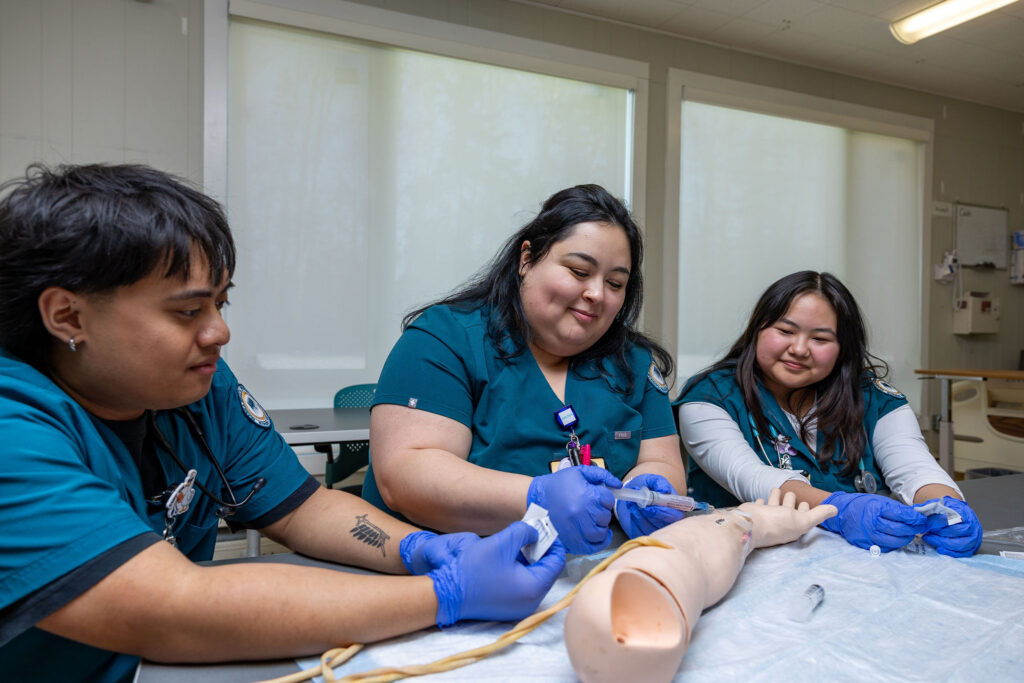
The RN to BSN program ensures that Alaska-based Registered Nurses can continue providing care in local health facilities while pursuing higher education and advancing their professional goals. This flexible pathway supports working nurses in earning their Bachelor of Science in Nursing while offering an education grounded in cultural competence and cultural safety. The program also incorporates Indigenous ways of knowing and prepares nurses to serve as health and wellness advocates for Alaska Native communities across the state.

View the Nursing Program Student Handbook

Career Opportunities

Registered Nurses who attain a BSN degree have greater job placement opportunities and increased earning potential throughout the country.

Most courses are offered in two 7-week modules via distance delivery (full semester is 15 weeks). Applicants are accepted for both Fall and Spring semesters.

Foundational Studies
  • Written Communication (4)
  • Presentation & Media Literacy (3-4)
  • Critical Thinking (3-4)
  • Computation (3-4)
  • Intellectual Traditions (4)
  • Creative Endeavors (4)
  • Intercultural & Spiritual Understandings (3-4)
  • Biological/Physical Scientific Inquiry (4)
  • Social/Behavioral Scientific Inquiry (3-4)
  • Social Responsibility (2)
  • Personal Responsibility (1-2)
Co-Requisites

Courses that may satisfy BSN and Foundational Studies Courses:

  • Anatomy & Physiology (4)
  • History & Culture of AK Natives (4)
  • Lifespan Human Development (4)
  • Statistics I (3)
Major Studies
  • Professional Nursing (3)
  • Healthcare Ethics (3)
  • Evidence-Based Research & Practice (3)
  • Pathophysiology (3)
  • Health Assessment (3)
  • Nursing Leadership (3)
  • Healing Therapies (3)
  • Healthcare Informatics (3)
  • Population & Community Health: Inquiry & Practicum (6)
Self-Determined Studies

Students can meet the minimum graduation credit requirement by taking electives, credit-by-exam, applying transfer credit, credit earned through military training, assessment of prior learning, or other approved alternative methods of earning credit.

Completion

128 credits minimum are required to complete the degree program. Core competencies, foundational, major, and self-determined studies are offered in a mixed format of:

  • On-campus
  • Online via synchronous learning
  • Application
  • Application Fee*
  • Official College Transcript(s)
  • Copy of RN License

*Fee waiver available for those who qualify

Minimum GPA: 2.5 or higher
If you have a lower GPA, we are happy to work with you to complete your application

The Alaska Board of Nursing in keeping with statutes AS 08.68.100(a) and AS 08.62.290 and regulations 12 AAC 44.010 and 12 AAC 44.055, provides oversight and annual approval of nursing programs. All records were found to be in order. The Alaska Board of Nursing has issued full approval of APU’s Practical Nursing (LPN), ADN and RN to BSN programs for 2025. Additionally, the Board approved the development of an LPN to RN bridge program. The Board fully supports the continuation of the nursing education program at Alaska Pacific University.

The RN to BSN program option is accredited through:

Accreditation Commission for Education in Nursing (ACEN)
3390 Peachtree Road NE, Suite 1400
Atlanta, GA 30326
(404) 975-5000

Counseling Psychology


Uniquely designed for Alaskans seeking a program focused on knowledge and skills to move immediately into careers in behavioral health, addictions treatment, and other related fields.

Health Sciences


There is a prominent workforce demand for Health Science professionals across Alaska. Career options for individuals interested in pursuing this field are as varied as the landscape of Alaska itself.

Accreditation Commission for Education in Nursing


The Alaska Board of Nursing in keeping with statutes AS 08.68.100(a) and AS 08.62.290 and regulations 12 AAC 44.010 and 12 AAC 44.055, provides oversight and annual approval of nursing programs. All records were found to be in order. The Alaska Board of Nursing has issued full approval of APU’s Practical Nursing (LPN), ADN, and RN to BSN programs for 2025. Additionally, the Board approved the development of an LPN to RN bridge program. The Board fully supports the continuation of the nursing education program at Alaska Pacific University.

The LPN, ADN, and RN to BSN programs are accredited through:

Accreditation Commission for Education in Nursing (ACEN)
3390 Peachtree Road NE, Suite 1400
Atlanta, GA 30326
(404) 975-5000

On-Time Program Completion Rate Based on RN-to-BSN Program Option

(Expected Level of Achievement = 60%)

*Program completion rate calculation for students who complete the program of study on time begins with calculating enrollment on the first day of the first nursing course and ends with the completion of the course required for conferral of a certificate, diploma, or degree.

Meet Our Team